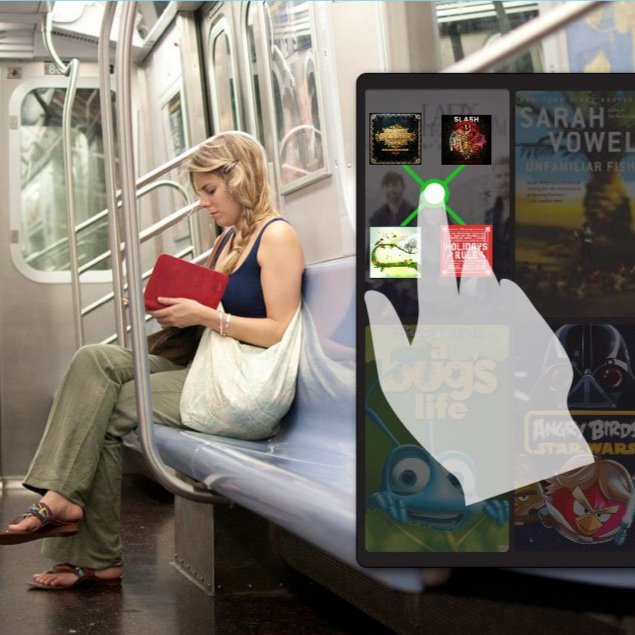
Here’s what Mr. Tappy has to say about their product:
Mr Tappy came from humble beginnings – in fact, he originally was made from plastic cut with a hacksaw and bent over a household toaster. This solution worked fine as a usability filming rig a few years back when ‘a phone was a phone’ …but when touch screens and tablet devices arrived, a more flexible and stable solution was required.
Through a series of prototypes and testing with some of Europe’s largest technology design and research agencies, Mr Tappy was born.
Mr Tappy was designed by Nick Bowmast, a UX researcher helping companies develop better products and services through customer insights. Often these products involve mobile devices and the insights come from watching them use products.
I’m giggling like a school girl… Prototyped? Specifically for UX research? Swoon. Now if I only had an excuse to rush out and buy one.
Or, just because something’s serious, doesn’t mean it can’t be freakin’ funny, yo.
Comedian Chris Bliss “explores the inherent challenge of communication, and how comedy opens paths to new perspectives” in this fantastic TED talk. As a writer of serious comedy, and funny serious stuff, and as a Venn diagram nerd, and a fan of over explaining things, I was excited to watch this. If you’re an over analyzer like me, you’ll probably enjoy it too.
The film, directed by Hank Blumenthal, finds William Forsythe in a story about a team of reality TV paranormal investigators who have yet to truly “make contact. They decide to try their luck at an abandoned mansion in the deep-south with a long history of hauntings. As the night unfolds, and the evidence begins to pile up , their skepticism turns to terror, and their initial goal of contact turns into the primal one of just making it out of this real haunted mansion alive.
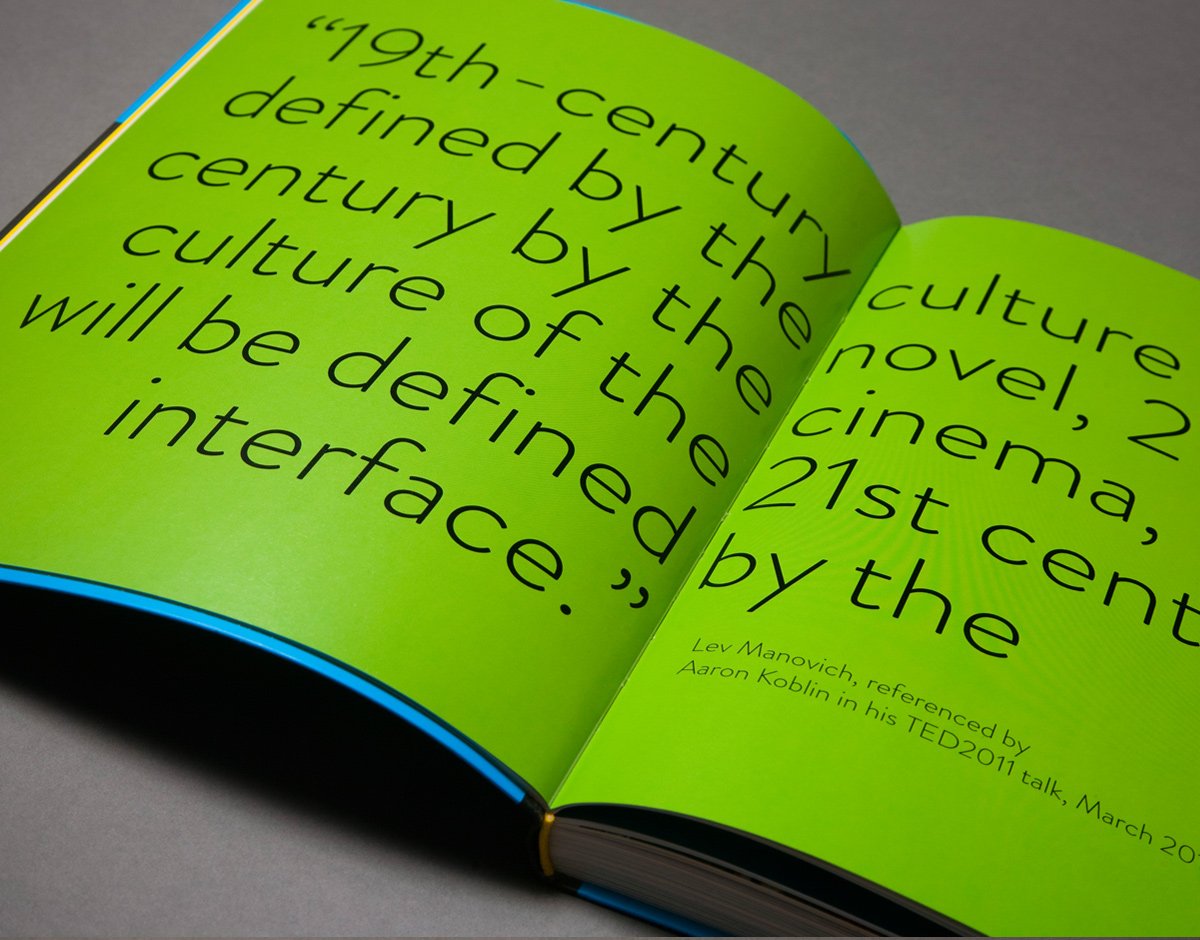
What new considerations will we designers have to take into account when our users interact with devices that are plugged directly into their nervous systems, or installed in their bodies?
What if we could change our view of the world with the flick of a switch? The emerging field of optogenetics combines genetic engineering and electronics to manipulate individual nerve cells with light. With this technology, scientists are developing a new form of retinal prostheses. Using a virus to infect the degenerate eye with a light-sensitive protein, wearable optoelectronics can establish a direct optical link with the brain. Song of the Machine explores the possibilites of this new, modified – even enhanced – vision, where wearers adjust for a reduced resolution by tuning into streams of information and electromagnetic vistas, all inaccessible to the ‘normally’ sighted.
I’ve been fascinated with this concept–the idea of enhancing human experience through designed objects that integrate with our bodies–ever since I watched this TED talk by Aimee Mullins, who sees her prosthetic legs as a desirable enhancement rather than simply a replacement for her legs:
Aimee doesn’t want her old legs back. She considers herself better off being able to change her body to suit her mood, and her desires.
It got me thinking, how does the job of a UX designer change when we can help users meet their needs not just through designing easy to understand, learn, and use digital interfaces on their computers, and handheld devices, but by changing a user’s body? What new needs can we help people meet? What are the ethics that we should follow? What should we do for example when a perfectly sighted person wants to blind himself to take advantage of an enhanced visual system?
I’ve been a member of the design inspiration sharing social network for about a year now. I use it as a giant inspiration board. A place to save all the things I see throughout the day, on blogs, or that are shared by friends on twitter, that make me happy, and that I like.
Up until about a week ago, that is.
Before then Pinterest was simply a place for me to save the things I liked. Oh, sure, I’d get a few people liking my pins, repinning them to their own boards, or even following me. I thought that was kind of fun. I had notifications set to send me an email as soon as there was site activity, and I’d get about 10 a week. Maximum. And then, in the space of a day, all that changed. My inbox filled up with individual email notifications. Hundreds of them.
The first thing I did was to turn off individual email notifications. And then I noticed something interesting. All these new likes and repins were only for a handful of my pins, and there was no uptick in the number of folks who followed me. It made me wonder what was going on?
I know that Pinterest has been exploding of late. There are blog posts about how it drives more referral traffic than Google+ (and almost as much as Twitter), and that Pinterest is incredibly successful with women (80% of Pinterest users are women. I guess I’m just in touch with my feminine side.).
Could all these new users account for my pin’s 15 milliseconds of fame? Or did Pinterest release some new feature that suddenly boosted my pins’ popularities?
What do you think?
Where am I?
You are currently viewing the archives for February, 2012 at Jason Nunes.